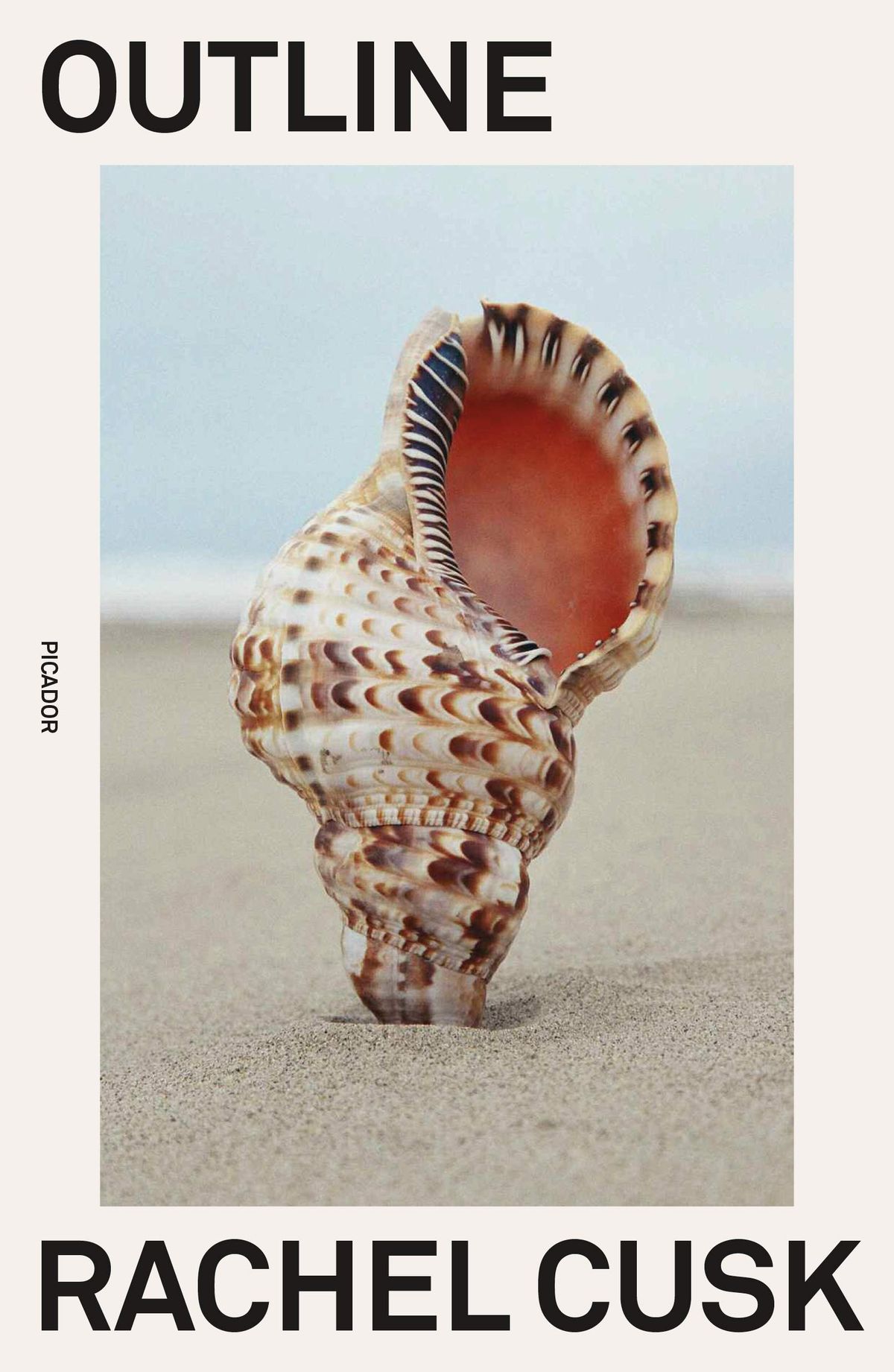
Outline by Rachel Cusk Review

Outline is like drowning. It’s a weight, a suffocation of stories and characters and social obligation and emotional labor. It ties this to the ankles of the narrator and pushes her into the water, and she drags the reader along with her. We’re soon underwater, done in by the density and pressure of the prose and the minute details of daily life and personal histories that compose everyone she encounters.
In this way, Outline is both exhaustive and exhausting, and perhaps feels much more important than it actually is. The narrator, a writer from London, travels to Athens to teach a writing course. On the plane there, she has a conversation with her seat neighbor (referred to only as “[her] neighbor” for the duration of the book. Her neighbor pours out every little facet of his life he sees fit to tell a stranger: the collapses of his marriages, the failings of his wives, his financial windfalls and struggles.
All of these personal facts are a barrage, a pelting hailstorm. What is the narrator meant to do with all of this information? What are we as readers meant to do with it? The neighbor unburdens himself of this baggage, heaving it off and forcing it onto us. Now we’re stuck carrying it around, a millstone of banality.
Outline soon picks up its own unique rhythm, where each chapter sees the narrator in another social setting, another contemplative, soul-searching, one-sided conversation of which she is on the receiving end. The start of a new chapter instills a certain sense of dread, with the looming threat of emotional labor and social anxiety closing the gap. The novel is a never-ending parade of strangers spilling their guts, never conceding an inch, never giving space to breathe or push back or exist.
And yet, the novel then folds in on itself at the end so elegantly, like waves cresting, in a final sequence that instills a moment reminiscent of Joycean epiphany. Keeping spoilers to a minimum, a character reveals themselves to be the narrators perfect foil. While the narrator allows the characters in her orbit to bombard her, she remains even and calm about absolutely everything. Her foil is an anxious, fidgety mess and recognizes, through self-consciousness, when others couldn’t care less about her. Meanwhile the foil does not know in this instant that she is acting as the narrator’s mirror, an altered version of herself.
In turn, Outline is a challenging read, placing the weight of emotional labor and social pressure on both its narrator and the readers to which she conveys. At the same time, it is constructed so holistically, written with such care, and comes together so completely at its close that it just might make all of that labor worth it.